
As Pilates continues its rapid expansion globally, the distinction between commercial and home reformers has become more important than ever. With the global Pilates equipment market projected to cross $1 billion in valuation in the coming years, both boutique studios and serious home practitioners are investing in higher-quality apparatus.
But not all reformers are built the same.
Whether you are opening a studio, upgrading equipment, or considering a home investment, understanding the structural, mechanical, and financial differences between commercial and home reformers is critical.
This guide breaks down the key differences — from engineering and materials to long-term ROI.
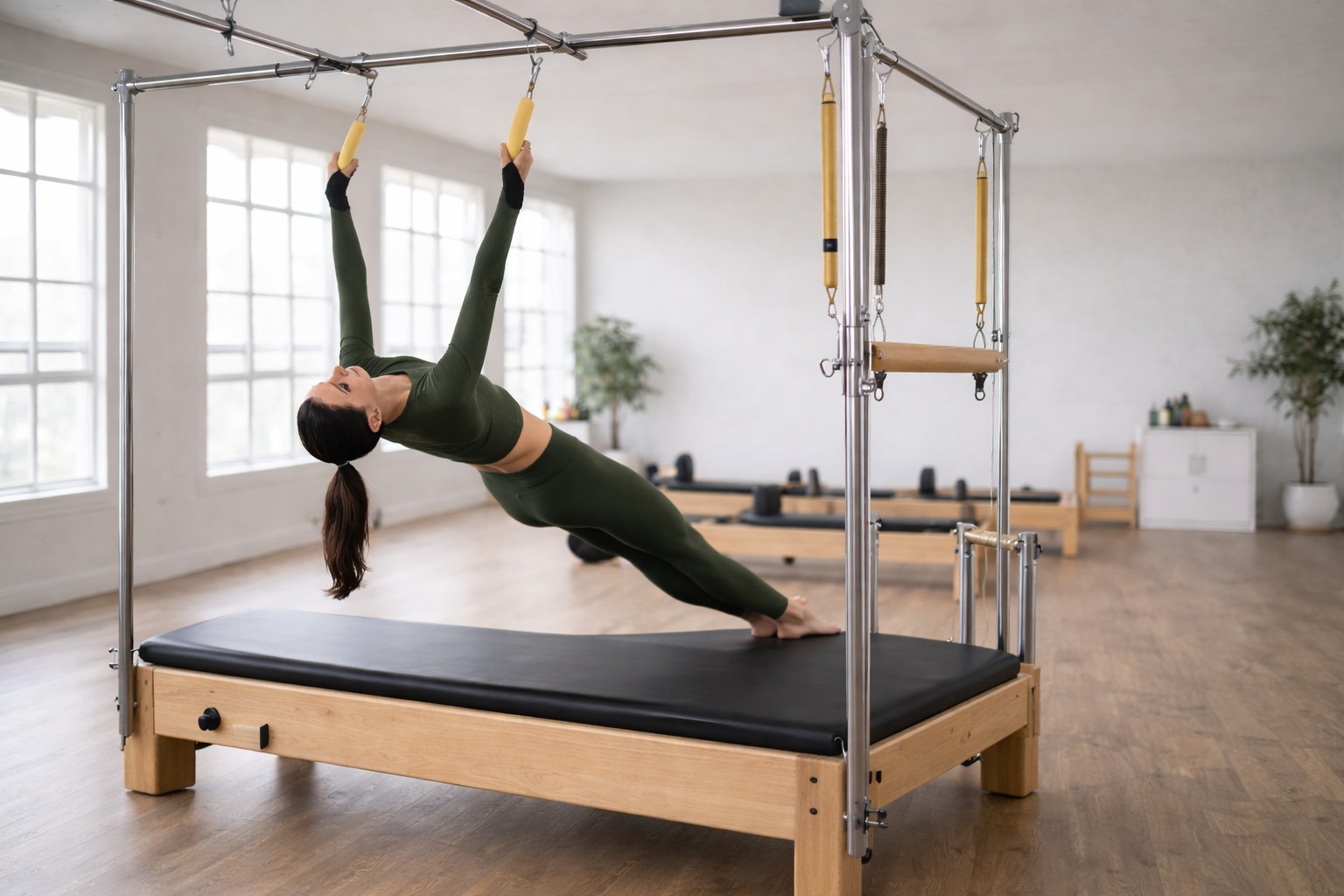
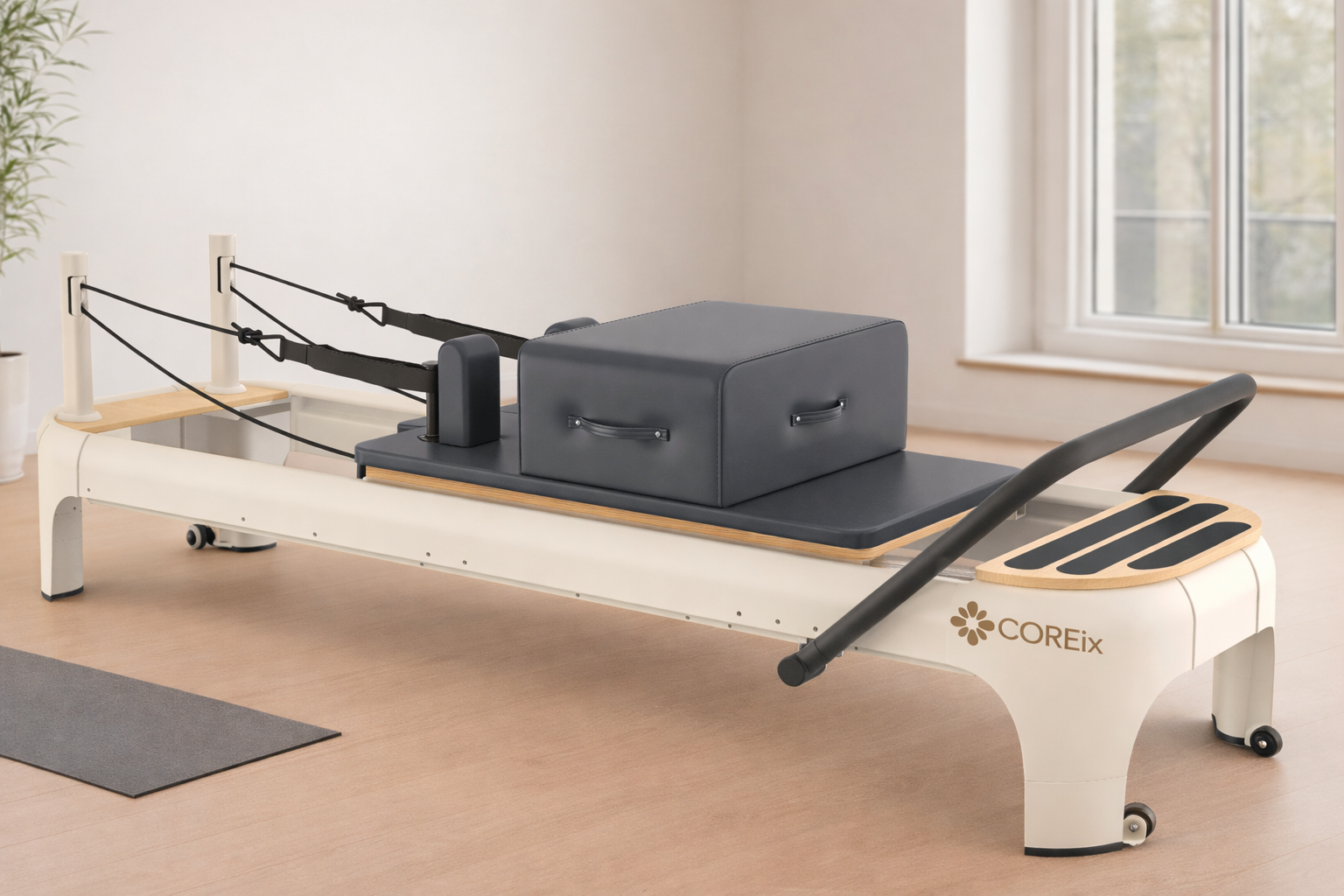
The most immediate difference between a commercial Pilates reformer and a home reformer lies in its frame construction.
Designed for:
Common materials:
These frames resist “racking” — structural warping caused by repetitive lateral stress. The result is a stable, silent carriage glide even under dynamic movements like jumpboard work.
Designed for:
Materials may include:
While suitable for personal use, folding mechanisms introduce additional stress points that limit load capacity and dynamic performance.
The resistance system defines how a reformer feels.
Steel springs provide progressive resistance. They challenge muscles through both eccentric and concentric phases of movement, offering the “studio feel” advanced practitioners expect.
Elastic cords are quieter and lighter but lack the refined resistance curve of industrial-grade steel springs.
For beginners, this may be sufficient. For advanced practice, it can feel limiting.
Alignment and range of motion depend on carriage length and width.
These features accommodate users from approximately 5’0” to 6’6” without compromising joint alignment.
Space-saving designs often sacrifice biomechanical range, which may affect taller or broader users.
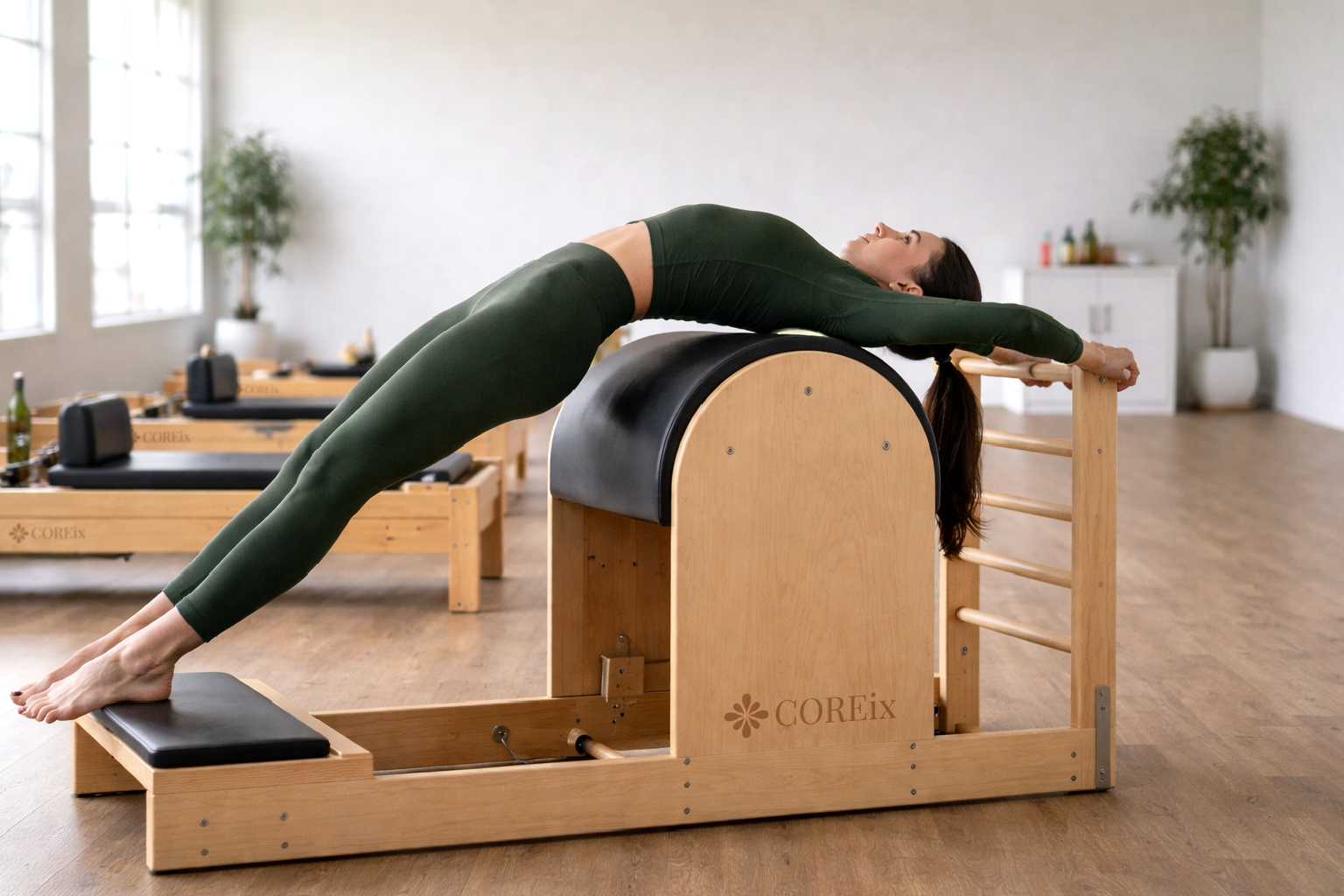
In studio environments, equipment must withstand high traffic and shared usage.
Designed for durability and sanitation.
Adequate for personal use, but not ideal for commercial wear and tear.
A commercial reformer is engineered for longevity.
Using a home-rated reformer in a studio environment can void warranty coverage entirely.
Average boutique class cost: $30–45
3 classes per week: $4,500–7,000 annually
High-end home reformer cost: $3,000–4,000
Break-even: 85–115 sessions
Typically achieved within one year of consistent practice.
Premium brands also retain 50–70% resale value.
A $5,000 commercial reformer used:
Generates significantly higher lifetime revenue than a $2,500 unit that fails under heavy use within two years.
In commercial settings, durability equals revenue continuity.
Home users often require compact solutions.
Folding reformers:
Solid-body reformers:
For serious home practitioners seeking studio-grade performance, light-commercial solid units provide the ideal balance.
Commercial reformers are increasingly incorporating:
Studios using connected equipment report higher member retention due to measurable progress tracking.
Home reformers typically prioritize mechanical simplicity over digital integration.
The difference between a commercial Pilates reformer and a home reformer is not simply about price. It is about engineering intent.
Commercial reformers are built for frequency, structural integrity, and precision biomechanics. Home reformers prioritize convenience, portability, and space efficiency.
For serious practitioners and studio owners, the reformer is not a purchase — it is an investment in movement quality, safety, and longevity.
Choosing the right grade ensures that your equipment remains a reliable partner in your Pilates journey for years to come.
WhatsApp us