If you are researching the price of a Pilates reformer in India, you will quickly notice something confusing:
Prices range from ₹45,000 to over ₹5,00,000.
Why such a massive difference?
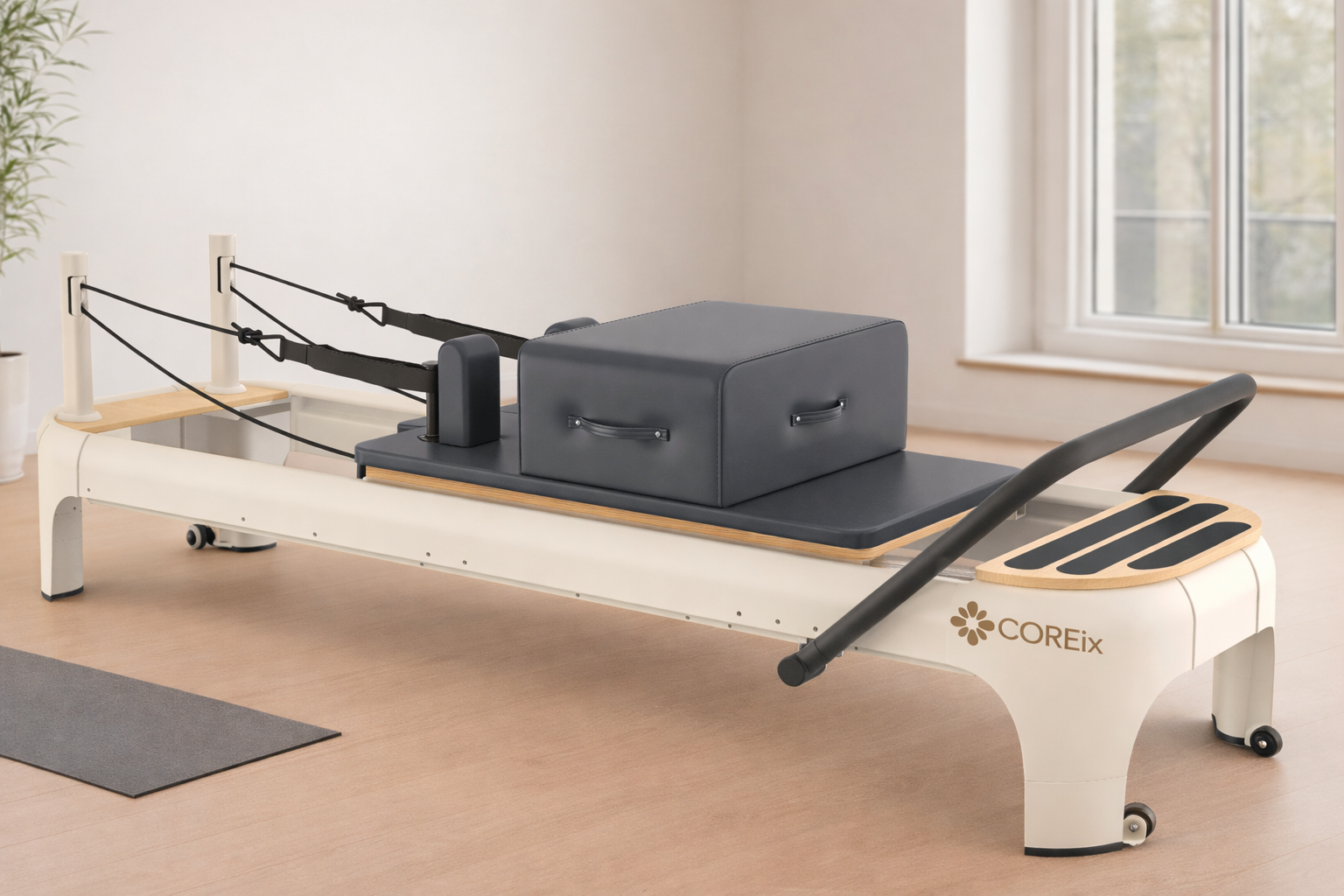
The answer lies in engineering, materials, mechanical precision, taxation, and long-term durability. A Pilates reformer is not just a piece of gym equipment. It is a precision instrument designed to deliver controlled resistance and biomechanical alignment.
In this guide, we break down exactly what affects Pilates reformer pricing in India in 2025–2026.
Current Pilates Reformer Price Range in India (2026)
Here is a simplified market overview:
Segment
Price Range (INR)
Ideal For
Entry-Level Home Reformer
₹45,000 – ₹1,30,000
Beginners / Light home use
Mid-Range Studio Reformer
₹1,30,000 – ₹2,00,000
Boutique studios / Premium homes
Professional Studio Reformer
₹2,00,000 – ₹3,00,000
Commercial studios
Reformer with Half Cadillac
₹2,50,000 – ₹5,00,000
Rehab & advanced studios
Imported Premium Brands
₹5,00,000 – ₹6,50,000+
Luxury studios
The price variation reflects structural and mechanical differences, not just branding.
1. Frame Material: The Primary Cost Driver
The most important factor affecting Pilates reformer price in India is the frame material.
Hardwood Frames (Maple / Oak)
Premium aesthetic
High vibration absorption
Requires kiln drying and humidity treatment
Resistant to warping
These are typically priced between ₹1,40,000 to ₹3,00,000 depending on build quality.
Aluminum Alloy Frames
Lightweight but extremely strong
Powder-coated finish
Rust-resistant (important for coastal India)
More modern design
Professional aluminum reformers often fall in the ₹2,00,000 – ₹2,50,000 range.
Lower-priced aluminum units (under ₹1,00,000) often use thinner extrusions, which may flex under load.
2. Spring Quality & Resistance System
The resistance system significantly impacts price.
High-Quality Reformers Include:
5–6 calibrated steel springs
Nickel-plated music wire or premium spring steel
Adjustable gear bar system
Tested for 3,000+ operational hours
These springs provide smooth, progressive resistance without snapping or jerking.
Budget Reformers Often Use:
3–4 basic springs
Elastic resistance cords
Limited tension adjustment
Elastic cords are cheaper but provide inconsistent resistance and wear out faster.
Spring quality alone can account for ₹30,000–₹60,000 in price difference.
3. Carriage Glide & Wheel System
The “glide experience” defines reformer quality.
Premium models use:
8-wheel carriage systems
Dual-angle treaded rollers
CNC-machined aluminum rails
Polyurethane anti-flat-spot wheels
Budget machines often use:
4-wheel systems
Plastic rollers
Basic tracks
A smooth carriage requires precise engineering — and that precision increases cost.
4. Reformer vs Reformer with Half Cadillac
Many buyers notice a ₹40,000–₹70,000 jump when upgrading to a combo unit.